The Short Version
Sprouts need more care with cleanliness than microgreens. The warm, wet jar that grows sprouts also grows bacteria. Read Sanitizing Sprout Seed before you start.
- Use seed sold for sprouting, and weigh it.
- Sanitize the seed and the jar.
- Soak the seed in cool water for 8 to 10 hours.
- Drain, rinse and tilt the jar so it keeps draining.
- Rinse and drain 2 or 3 times a day.
- On harvest day, rinse once more and let them drain until dry.
- Pack them and refrigerate them at 41 °F or colder right away.
When you start a jar in the app, each rinse shows up on Today at the right time. Log the room temperature each morning. It's part of your food safety record.
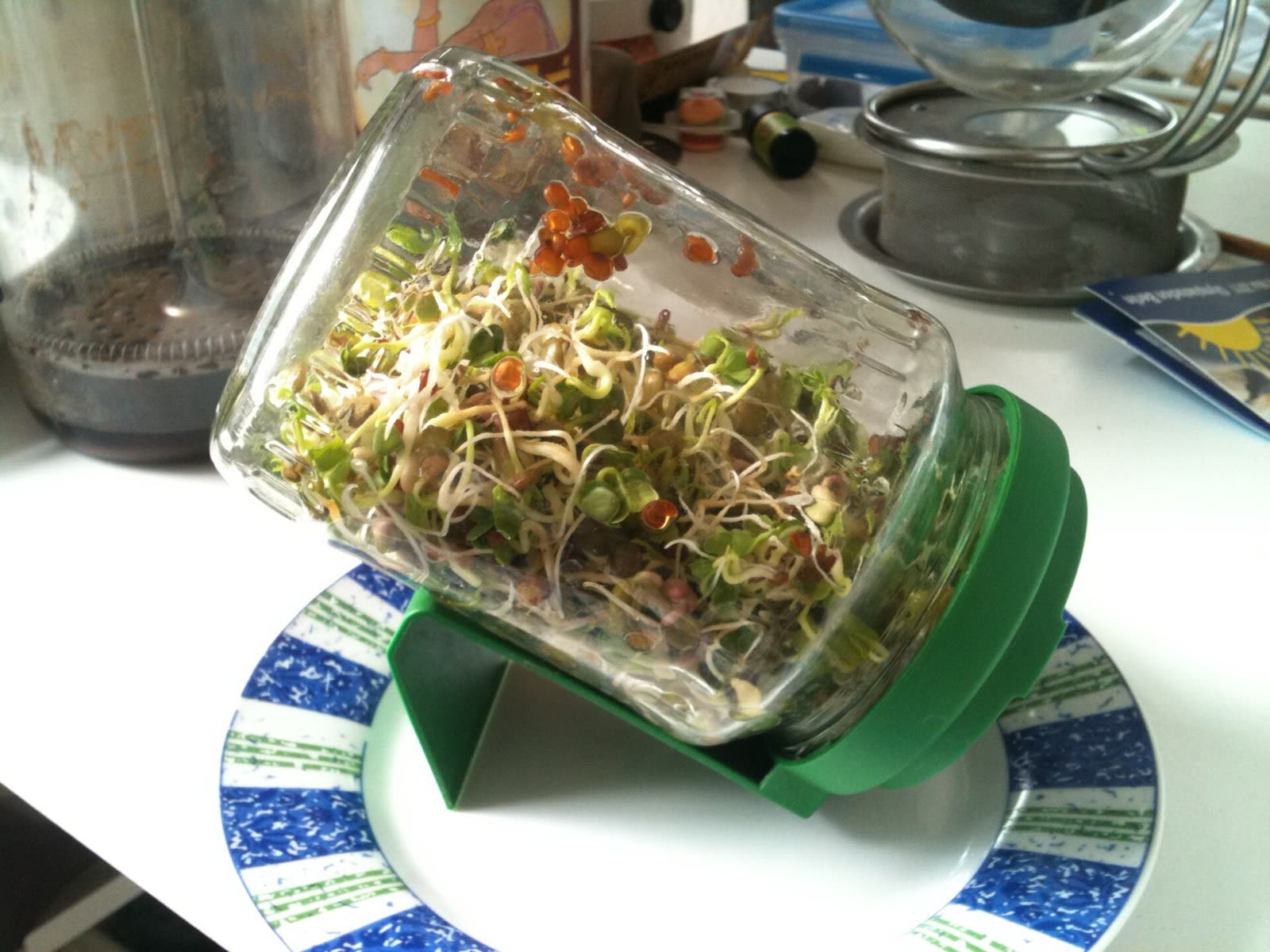
Best Sprouts to Start With
| Sprouts | How Hard | Ready In | Soak | Taste | Daily Care |
|---|---|---|---|---|---|
| Broccoli Sprouts | Easiest jar | 5 days | 8 hours | Mild and a little peppery | Rinse twice, about 2 minutes each |
| Mung Bean Sprouts | Easy | 4 days | 10 hours | Crisp and mild | Rinse 3 times, about 2 minutes each |
| Alfalfa Sprouts | Easy | 5 days | 8 hours | Mild and fresh | Rinse twice, about 2 minutes each |
What You Need
For one jar of broccoli sprouts:
- A quart jar A wide-mouth glass jar is easiest to rinse and drain.
- A sprouting lid A screen or mesh lid lets water drain out and air in.
- Broccoli Sprouts Seed About 30 g for one jar. Buy seed sold for sprouting.
- A bowl to tilt the jar in The jar drains upside down at an angle, so water doesn't pool at the bottom.
- Kitchen scale (optional) Helps you use the same amount of seed each time.
Start With Clean Seed
Sprouts have caused many food poisoning outbreaks. Germs on the seed can multiply in a warm, wet jar, and rinsing doesn't remove them. That's why the seed matters so much.
- Buy seed sold for sprouting. Ask the supplier how it was grown and tested.
- Look over the seed and its bag for damage, dirt or signs of pests.
- Record each seed lot, so you can trace any jar back to its seed.
FDA's Produce Safety Rule requires the sprout farms it covers to treat seed before sprouting. The treatment must use a method backed by science. A farm can rely on treatment done by its seed supplier instead, with paperwork that proves it. Even if the rule doesn't cover your farm, follow the same steps.
We don't give a treatment recipe here. Follow FDA's sprout guidance and your seed supplier's directions, and record what you did each time.
If a seed lot is linked to illness, stop using it right away, and don't sell sprouts grown from it.
FDA advises children, older adults, pregnant women and people with weakened immune systems not to eat raw sprouts.
Sources (checked October 12, 2026)
- Guidance for Industry: Standards for the Growing, Harvesting, Packing, and Holding of Sprouts for Human Consumption (FDA, 2023)
- 21 CFR Part 112, Subpart M: Requirements for Sprouts (eCFR)
- FSMA Final Rule on Produce Safety (FDA)
- Selecting and Serving Produce Safely (FDA)
This is general information. Follow FDA guidance and your state and local rules.
Soak the Seed
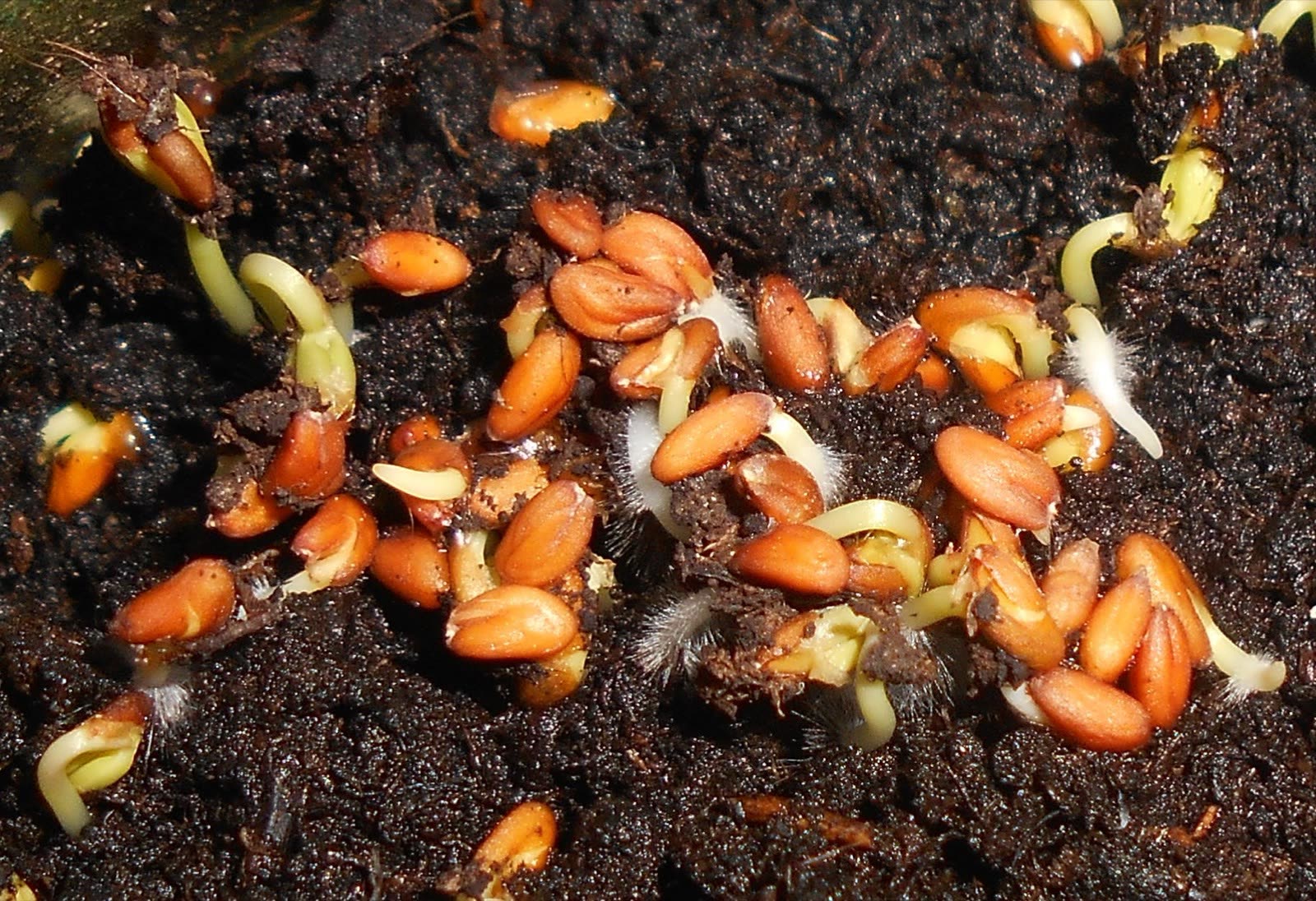
Soak the seed in cool water, then drain it, rinse it and tilt the jar so it keeps draining. Here's how long each one soaks, and what it looks like after:
- Broccoli Sprouts, 8 hours: The seeds swell a little and look plump.
- Mung Bean Sprouts, 10 hours: The beans swell to about twice their size and some skins split.
- Alfalfa Sprouts, 8 hours: The seeds swell to about twice their size in the water.
Rinse and Drain
Rinsing keeps sprouts clean and cool. Fresh water washes away heat and bacteria. Draining keeps the sprouts from sitting wet.
- Fill the jar with cool, clean water through the screen lid.
- Swirl it gently.
- Pour it all out.
- Rest the jar upside down at an angle, so it keeps draining.
Rinse 2 times a day, morning and evening. Rinse 3 times a day for mung beans, or when the room is warm. Use water that's safe to drink every time.
A jar resting flat holds water at the bottom. That water sours and can spoil the whole jar. A dish rack or a bowl holds jars at a good angle.
Keep the room between 65 and 75 °F. Log the room temperature each morning. It's part of your food safety record.
Smell the sprouts each time you rinse. They should smell fresh. A sour or rotten smell means it's time to throw them out. See When to Throw a Tray or Jar Out.
Harvest and Chill
Sprouts are ready in 3 to 5 days, when most have a short tail and the first leaves are starting to open. Mung beans are ready when the tails are 1 to 2 inches long.
- Wash your hands, and sanitize your containers.
- Give the sprouts a final rinse.
- Let them drain until the surface feels dry. Many growers wait 8 to 12 hours after the last rinse. A salad spinner also works.
- Weigh them and log it in the app.
- Pack them and refrigerate them at 41 °F or colder right away.
Wet sprouts spoil fast. Water that pools in a container turns them slimy. Take the time to get them dry.
Alfalfa and broccoli sprouts can sit in indirect light on their last day, and their leaves turn green. Keep mung beans in the dark so they stay pale and crisp.
Sell sprouts within a few days of harvest. Throw out any that smell sour or feel slimy.
Keep Them Fresh
Keep them in a closed container in the fridge. Rinse just before eating. They keep about 5 days.
Sources (checked October 12, 2026)
- FDA Food Code
- Recommendations for the Temperature Control of Cut Leafy Greens During Storage and Display (FDA)
This is general information. Follow FDA guidance and your state and local rules.
When to Throw a Jar Out
Be stricter with sprouts than with microgreens. A sour smell or any slime in a jar means the whole jar goes. When sprouts turn slimy or brown, these are the usual causes:
- Not Rinsed Often Enough: It's been more than 12 hours since the last rinse. Rinse morning and evening, every day.
- Too Warm: The jar is near a window, appliance or heater. Keep jars around 65 to 75 °F.
- Too Crowded: The jar is packed full and sprouts are pressed together. Start with less seed per jar.
For trays as well as jars, see When to Throw It Out.
Let the App Keep Track
Microgrower puts each rinse on Today at the right time, with a reminder, and keeps your seed lots and room temperatures as your food safety record.